By the time most business owners start asking whether their books truly comply with U.S. GAAP, something has already changed.
Revenue has grown. A lender, investor, or buyer has asked sharper questions. Or the stakes of getting the numbers wrong are simply higher than they used to be.
At that point, the label “GAAP compliant” matters far less than whether your financials can stand up to scrutiny.
Book a Financial Reporting & Tax Strategy Consult
A focused conversation to confirm where your books stand and what matters next.
What U.S. GAAP Compliance Actually Requires
U.S. GAAP is not a vague standard or a general expectation of “good bookkeeping.”U.S. GAAP is not a vague standard or a general expectation of “good bookkeeping.”
It is a formal, codified framework established by the Financial Accounting Standards Board (FASB) and organized within the Accounting Standards Codification (ASC). The Codification is the authoritative reference used in audits, lender reviews, and due diligence processes.
For a business owner, true GAAP compliance generally means:
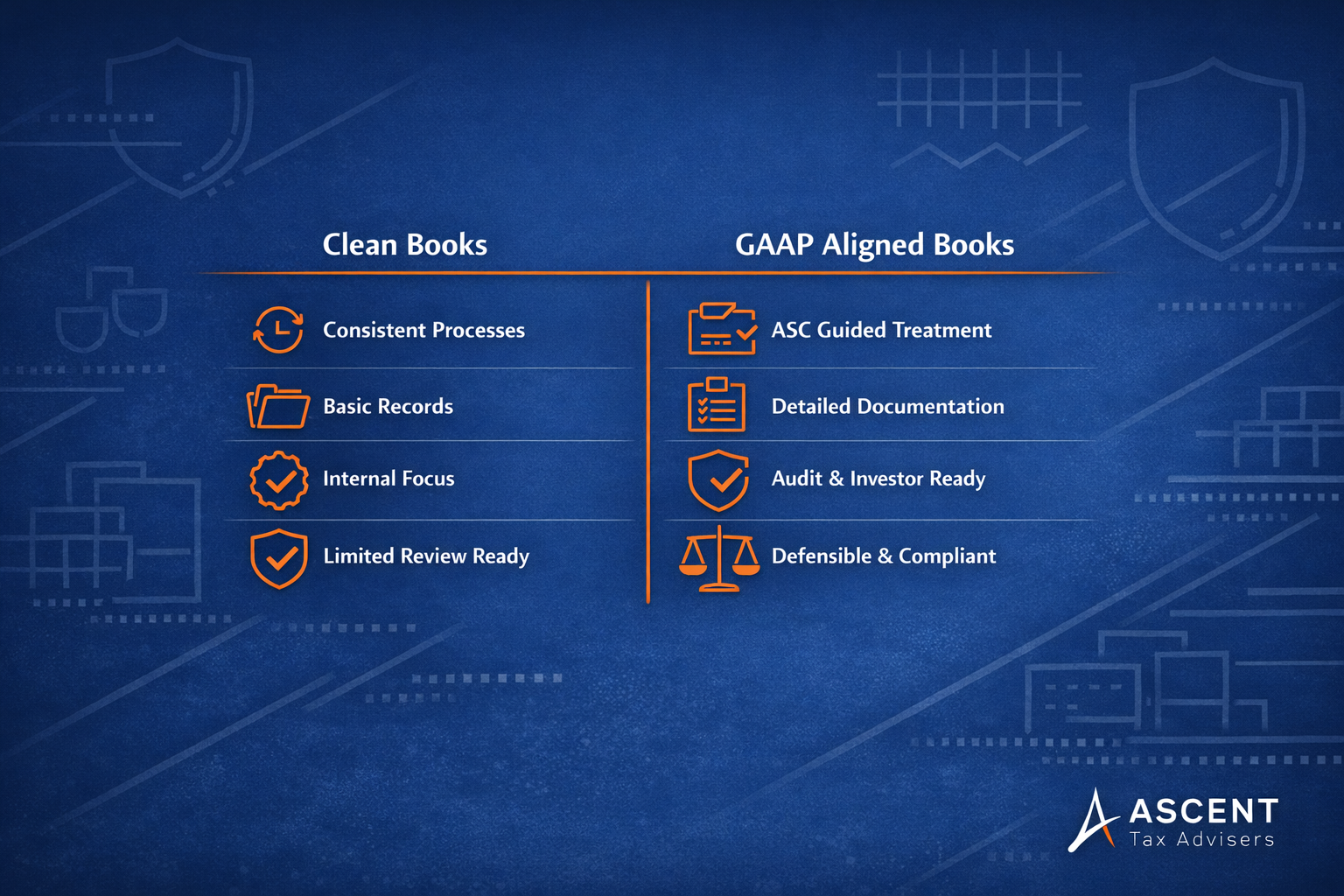
- Accounting treatment aligns with applicable ASC guidance
- Standards are applied consistently over time
- Key judgments and assumptions are documented
- Financial statements can be explained and defended, not just produced
Many businesses meet some of these criteria. Fewer meet all of them intentionally.
Want a quick reality check?
Get the GAAP Readiness Checklist
Identify common gaps before a lender, investor, or buyer does.
Why Many “GAAP Compliant” Books Don’t Actually Comply
In practice, GAAP is often treated as shorthand for:
- Accrual accounting
- Clean reconciliations
- Reasonable categorization
Those elements are important, but they are not the same as compliance with the Accounting Standards Codification.
Most gaps appear because:
- Accounting decisions rely on habits, intuition, or software defaults
- No one has explicitly evaluated which ASC topics apply
- Documentation exists informally or not at all
This usually isn't intentional negligence. It's a natural result of growth outpacing systems and personnel.
The issue is that these gaps tend to surface at the worst possible time: when outside parties are reviewing your financials.
Schedule a GAAP Alignment Review
Know what would be questioned in an audit, lender file, or digilence review.
How to Know Whether Your Books Truly Comply
You don’t need to read the Codification yourself to assess whether your financials are built on solid ground. But there are a few practical indicators that distinguish true compliance from loose labeling.
Your books are more likely to be GAAP aligned if:
- Accounting treatments can be tied back to specific standards
- Revenue, expenses, and liabilities are recognized intentionally, not by default
- Changes in treatment are documented and explained
- Your financial statements include required disclosures in the related notes
- Your advisor can articulate why something is handled a certain way
If those questions lead to uncertainty, that doesn’t mean your books are “wrong.”
It means they may not be prepared for the level of scrutiny your business is approaching.
If you're unsure on any of these, don't guess.
Book a Consult
We'll identify what matters, what doesn't, and the fastest path to clarity.
Where GAAP Fits with Tax Strategy
One common misconception is that GAAP compliance and tax planning are separate conversations.
In reality, they are closely connected.
Financial reporting decisions influence:
- Timing of income and deductions
- How transactions are structured
- The quality of information used for planning
At Ascent Tax Advisers, we view GAAP not as an academic exercise, but as part of a coordinated planning system where financial reporting, tax strategy, and long term goals are aligned rather than working against each other.
See How Proactive Planning Works
Not compliance. A coordinated strategy tied to how your business actually operates.
What You Get with Ascent’s Approach
Ascent Tax Advisers works with growth stage businesses that want more than reactive compliance.
Our work focuses on:
- Evaluating how your financials are currently prepared
- Identifying where standards based clarity matters most
- Aligning accounting treatment with documented positions
- Coordinating reporting decisions with proactive tax planning
We don't attempt to make every business "perfectly GAAP" in theory.
We help you build the right level of rigor for where your business is going.
Schedule a Consult
A focused review to clarify your reporting position and next steps.
How the Process Works
When you engage with Ascent, the process is straightforward and intentional:
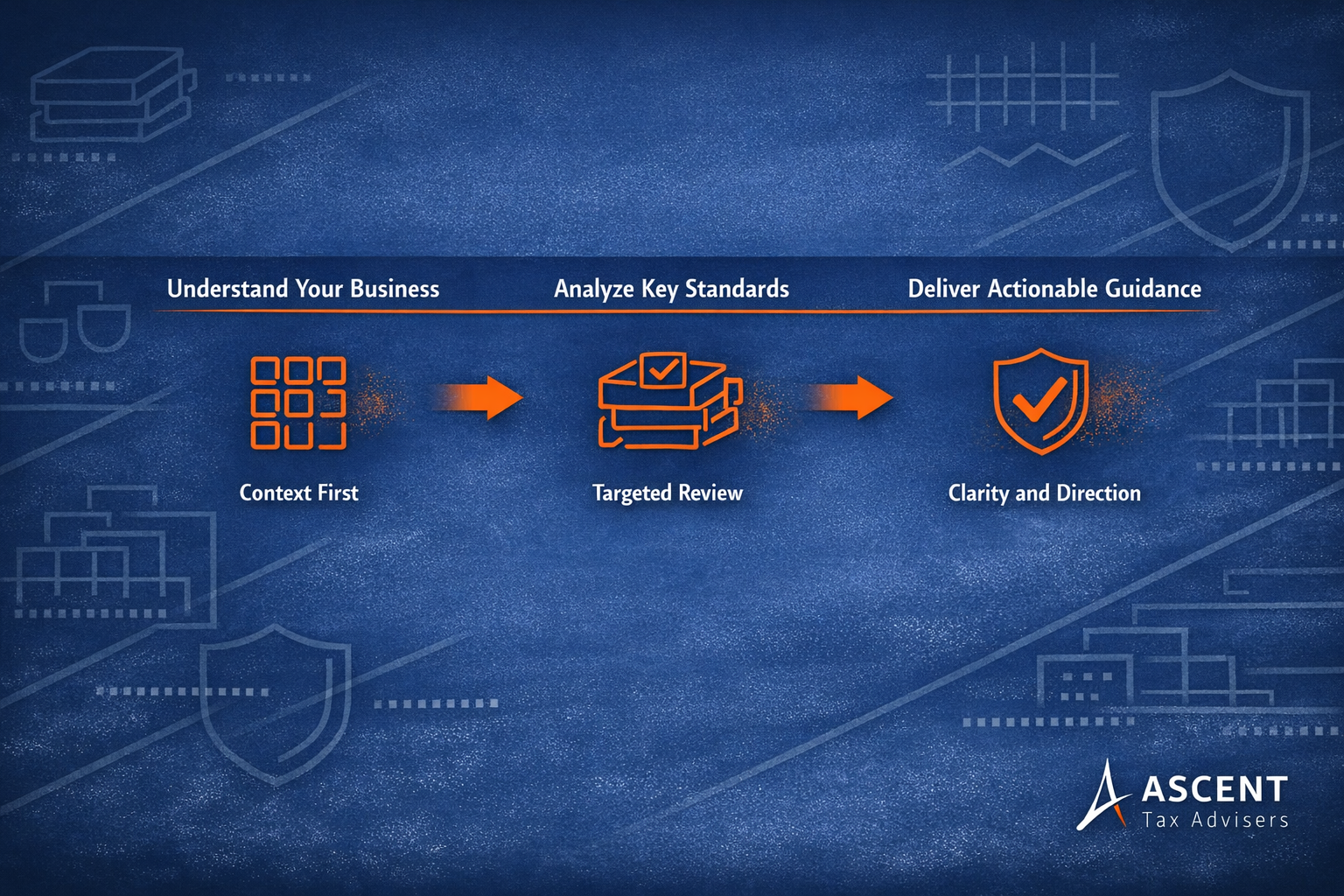
- Context First
We understand your business, growth trajectory, and current reporting setup. - Targeted Review
We identify where GAAP standards and ASC guidance actually apply and where they don't. - Clarity and Direction
You gain a clear picture of risks, priorities, and next steps tied to your goals.
This approach minimizes disruption while increasing confidence.
No pressure. Just clarity.
What Happens Next
If you’re questioning whether your books truly comply with U.S. GAAP, or whether they would hold up under audit, financing, or due diligence, the next step is a focused conversation.
Book a call to review your financial reporting and tax strategy
